


What Is The Egypt Tour Experience? From Pyramids To Red Sea
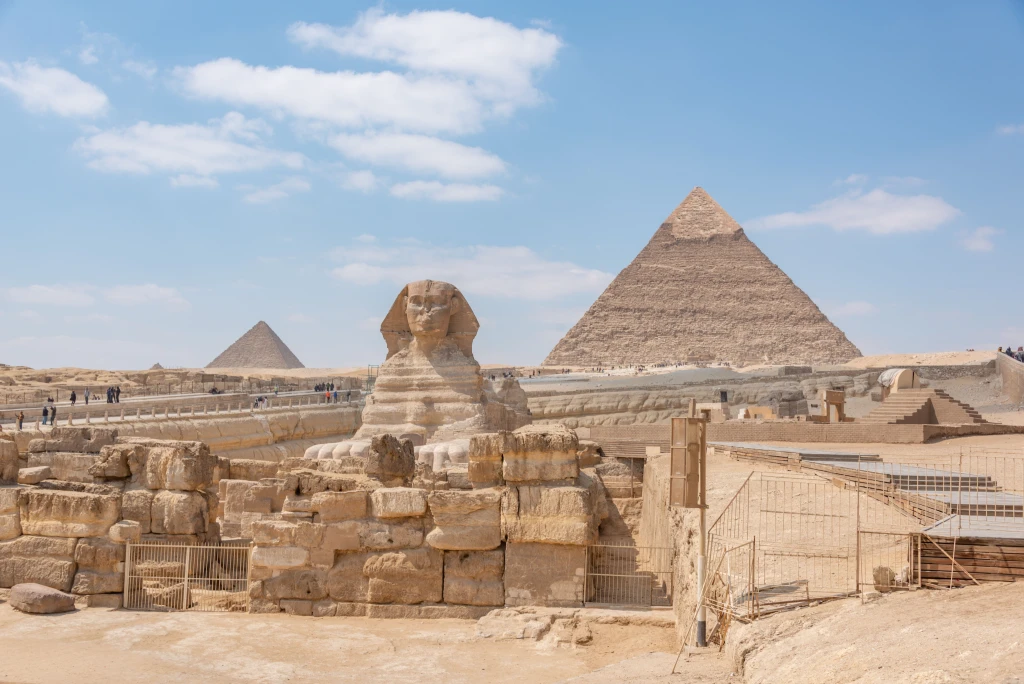
Before visiting Egypt, a few images come to mind: the Pyramids, the Sphinx, the desert, and the Nile.
Then, once you visit the country, you realize that Egypt has much more than just those things.
In my opinion, the most beautiful part of Egypt begins exactly here. On the same trip, within just a few days, you can find yourself immersed in completely different worlds. Leaving behind the relentless pace of Cairo, you stand before the Giza Pyramids, facing thousands of years of history. A few days later, you are swimming in the crystal-clear waters of the Red Sea. If you add Luxor to your itinerary, temples, the Valley of the Kings, and an entirely different side of Egypt along the Nile banks come into view.
That’s why evaluating Egypt through just one city always feels incomplete to me.
To truly see Egypt, you need a bit of Cairo, a bit of Ancient Egypt, a bit of desert, and definitely a bit of the Red Sea.
Therefore, among Holitera’s current Egypt Tours, you won’t find programs focused on only a single city; instead, there are routes that combine Cairo, Sharm El Sheikh, Hurghada, and Luxor in various combinations.
The Moment You Enter Cairo, Egypt Reveals Itself Immediately
Cairo is not a quiet and sterile European capital.
In fact, the city’s character stems partly from this.
Traffic, honking horns, crowded streets, shops, and a city in constant motion greet you. At first, it might be a bit overwhelming, but you quickly get used to this rhythm.
On one side lies modern Cairo, and on the other, the Nile. As you move a bit further, historic neighborhoods and markets begin.
But the main question in everyone’s mind is clear:
When will we see the pyramids?
As you approach Giza, the moment you first spot the pyramids emerging from behind the urban fabric, you feel that your Egyptian journey has truly begun.
Seeing the Pyramids in Photos Is Not the Same as Standing Before Them
We have seen so many photos of the Giza Pyramids throughout our lives that, before visiting, we might fall into the feeling of “I already know what they look like.”
But when you arrive in front of them, the scale changes.
Especially when you get close to the Great Pyramid of Khufu, you notice the size of the stone blocks. What appears as a single structure in photos turns out to be an incredible engineering feat consisting of massive stones stacked upon one another.
Another surprising detail is how much closer the pyramids are to the city than we imagine.
In movies, they are usually shown in the middle of endless deserts. In reality, however, the urban life of Giza is right next door.
Egypt is indeed a country like this.
It shatters the image in your mind and replaces it with a more interesting reality.
Your Giza experience is completed when you move toward the Sphinx.
This place is naturally crowded. There are people taking photos simultaneously, listening to guides, walking toward the pyramids, and groups arriving from different countries.
Right here, the advantage of touring with an organized group becomes clearer. When it is decided where to stop, which spots to take photos from, which entrance to use, and how the day will be planned, time is used much more efficiently.
The Grand Egyptian Museum Has Changed the Cairo Experience
I now feel it is incomplete to simply see the pyramids in Cairo and move on.
The Grand Egyptian Museum (GEM) has become one of the most important stops in the Giza area.
When you see the pyramids, you encounter the colossal structures of Ancient Egypt. Once you enter the museum, you begin to understand the civilization behind these structures more closely.
Statues, objects from daily life, burial culture, pharaohs, and artifacts from the era of Tutankhamun remove Egyptian history from being merely about “pyramids.”
In my opinion, this is the best part of the museum.
In the morning, standing in front of the pyramids, you wonder, “How did they do this?”
A few hours later, you shift to asking, “How did these people live?”
A well-prepared Egypt tour should not only show places but also connect the story of the country.
Then, When You Move to the Red Sea, the Tour Seems to Start Over
The moment you travel from Cairo to Sharm El Sheikh or Hurghada, the character of your trip changes completely.
While the previous day was filled with discussions of pharaohs, pyramids, and museums, the next morning the agenda shifts to swimsuits, the sea, and boats.
This transition is one of the things that makes Egypt so special.
Especially in Sharm El Sheikh, the water of the Red Sea is one of the first noticeable details.
When you enter the water, its clarity and underwater life offer an experience different from a classic beach vacation.
Due to its corals, colorful fish, and diving sites, Sharm El Sheikh has been one of the world’s major diving destinations for years.
If You Are Diving for the First Time, Sharm Is Another World
If you haven’t scuba dived before, the first few minutes can feel a bit strange.
Naturally, you breathe through your nose. With diving equipment, you need to get used to breathing entirely through your mouth.
Then you start descending.
And suddenly, the sounds of the world above fade away.
Swimming silently among the corals underwater, just a few days after dealing with Cairo’s traffic, beautifully illustrates how diverse the experiences of an Egyptian trip can be.
It looks great in photographs, but the act of diving itself cannot be captured by a photo.
Some moments require you to truly live them on site.
Sharm El Sheikh Is Not Just About the Sea
While daytime in Sharm focuses on the sea and activities, the evening brings a completely different atmosphere.
In areas like Naama Bay, Soho Square, and Old Market, there are restaurants, cafes, shops, and lively nightlife that continues late into the night.
Here, you also begin to understand Egypt’s bargaining culture.
You soon realize that the initial price quoted for an item is rarely the final price.
Let’s Plan the Right Route for You
You can check our Egypt tours page for current dates and prices, and contact us if you have any questions.
Subscribe to Our E-Newsletter
Subscribe to our e-newsletter to be instantly informed about campaigns and opportunities!