Balkan Tours
Balkan tours are among the most preferred international cultural tours due to their proximity to Turkey, the ability to travel visa-free to many countries, cities carrying Ottoman heritage, natural beauties, and the opportunity to visit multiple countries in a single trip. With Holitera Balkan Tours, you can explore the prominent countries of the Balkan geography, including North Macedonia, Kosovo, Albania, Montenegro, Bosnia and Herzegovina, and Serbia, with different route and duration options.
Depending on the Balkan tour program, cities such as Skopje, Ohrid, Tetovo, Pristina, Prizren, Tirana, Shkodra, Budva, Kotor, Mostar, Sarajevo, and Belgrade can be visited within the same trip. In broader itineraries, Greece, Bulgaria, Croatia, or other destinations in the region may also be added to the program.
At Holitera, Balkan tours are offered with options departing from Istanbul, Ankara, Izmir, Antalya, Konya, Adana, and Gaziantep, as well as flight-based, bus-based, short-duration, and conservative tour alternatives. For Istanbul departures, depending on the program, flights may depart from Istanbul Airport or Sabiha Gökçen Airport.
Since tour duration, flight information, countries visited, accommodation, meals, city tours, and services included in the price may vary for each program, it is important to review the details of your selected tour before booking.
What is a Balkan Tour?
A Balkan tour is a cultural tour that allows travelers to explore one or more Balkan countries located in Southeast Europe within the same travel program. The most popular Great Balkan tours generally combine several countries and numerous cities into a single route.
Thanks to the close proximity of Balkan countries, it is possible to wake up in a different country in the morning and walk through the historic center of another country by evening. Therefore, Balkan tours are a highly efficient international travel option for travelers who want to see many countries in a short time.
The strong historical and cultural ties between Turkey and the Balkans also differentiate the travel experience. Mosques, bridges, bazaars, caravanserais, and traditional neighborhoods remaining from the Ottoman period frequently appear, especially on routes through Bosnia and Herzegovina, North Macedonia, Kosovo, and Albania.
Which Countries Does a Balkan Tour Cover?
The countries visited on a Balkan tour depend on the selected program. Among the Great Balkan tours offered for sale at Holitera, there may be routes that visit Albania, Kosovo, North Macedonia, Serbia, Bosnia and Herzegovina, and Montenegro within the same program. Some current Holitera programs include routes covering these six countries and five capitals.
In broader Balkan programs, countries such as Greece, Bulgaria, and Croatia may also be added to the itinerary. Therefore, there is no single answer to the question "How many countries does a Balkan tour cover?" While short tours focus on a few cities or countries, Great Balkan tours offer a much more comprehensive journey.
North Macedonia
North Macedonia is one of the most frequently visited countries on Balkan tours. The capital, Skopje, is an important stop on the route with its bazaar, Stone Bridge, mosques, and historic texture dating back to the Ottoman period.
Another symbol of the country is Ohrid. The historic urban fabric, churches, bazaars, and lake views around Lake Ohrid form one of the most characteristic images of Balkan travels. Depending on the program, points such as Tetovo, Bitola, and Matka Canyon may also be visited.
Bosnia and Herzegovina
Bosnia and Herzegovina is one of the strongest stops on Balkan tours in terms of history and culture. In the capital Sarajevo, you can see Baščaršija, Sebil, historic structures, and traces of the city's multicultural past.
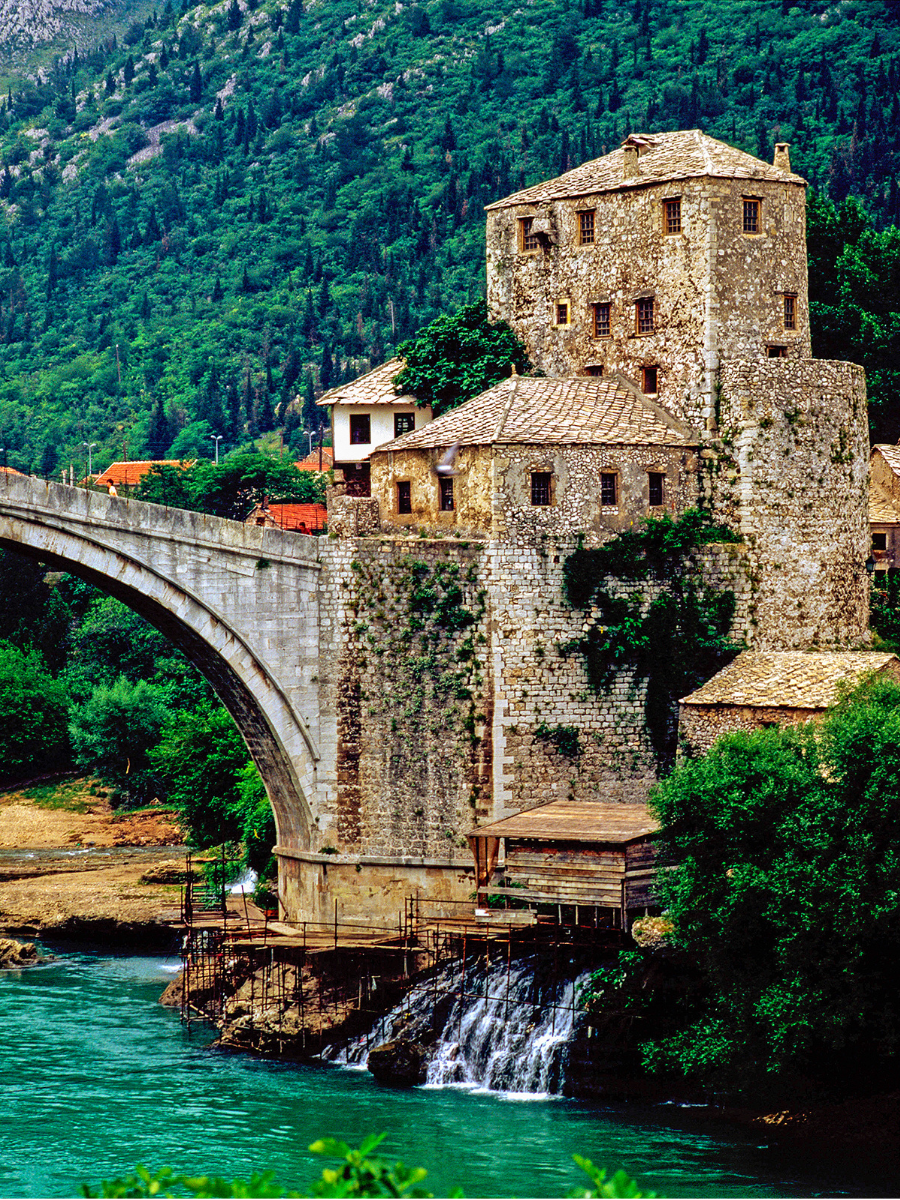
Mostar is one of the most photographed cities in the Balkans with the historic Mostar Bridge over the Neretva River and its stone streets. Depending on the program, nearby destinations such as Blagaj, Počitelj, or Medjugorje may also be part of the route.
Montenegro
Montenegro, located on the Adriatic coast, is one of the countries that adds sea and nature views to Balkan tours. Especially the Kotor Bay, the historic city of Kotor, and the Budva region stand out in Balkan routes.
The view of Sveti Stefan, the Adriatic beaches, and the medieval urban fabric make Montenegro one of the most visually impressive parts of the trip, alongside being a cultural tour destination.
Albania
Albania is one of the rising destinations in Balkan travel in recent years. The capital Tirana stands out with its buildings around Skanderbeg Square and its vibrant city life.
Depending on the program, Shkodra, Kruja, Berat, or different regions along the Adriatic coast may also be visited. The Albania route is often included in Great Balkan programs because it can be easily combined with North Macedonia, Kosovo, and Montenegro.
Kosovo
The most visited cities on Kosovo tours are Pristina and Prizren. Especially Prizren is one of the beloved stops of Balkan tours with its historic stone bridge, mosques, bazaar, and urban fabric surrounded by mountains.
Pristina, on the other hand, is the capital and modern face of Kosovo. Depending on the program intensity, both cities can be seen on the same day or as separate visits.
Serbia
The capital of Serbia, Belgrade, is one of the important stops of Balkan routes with its location where the Danube and Sava rivers meet, Kalemegdan Fortress, historic streets, and vibrant city life.
After the more traditional cities of the Balkans, Belgrade's big city atmosphere gives a different character to the route.
Where Are the Places to See on Balkan Tours?
One of the biggest advantages of a Balkan tour is bringing together very different geographies and urban fabrics in the same trip.
You might walk through Baščaršija in Sarajevo one day, see the Mostar Bridge the next, then move to Kotor on the Adriatic coast, and spend time by Lake Ohrid later in the trip.
Among the highlights on Balkan tours, depending on the programs, places such as Skopje Turkish Bazaar, Stone Bridge, Lake Ohrid, Matka Canyon, Prizren, Tirana, Shkodra, Kotor Bay, Budva, Sveti Stefan, Mostar Bridge, Sarajevo Baščaršija, Belgrade, and Kalemegdan may be found.
The visiting points of each tour differ. Therefore, if you definitely want to see a specific destination, you need to check the daily tour program before booking.
Visa-Free Balkan Tours
One of the important reasons why Balkan tours attract significant interest from Turkish travelers is that there are many countries in the region where Turkish citizens can visit visa-free for short-term tourism.
At Holitera, there may be visa-free Balkan tour options covering destinations such as Albania, Bosnia and Herzegovina, Montenegro, Kosovo, North Macedonia, and Serbia. Current Holitera tour lists also include visa-free programs covering these six countries.
However, visa regulations and border entry conditions may change. Additionally, if another country requiring a visa is included in the tour route, different travel documents may be required. Therefore, not only should you look at the "visa-free" phrase in the tour title, but also check the current visa and passport explanations for the selected tour.
Is a Passport Required for a Balkan Tour?
A valid passport is required for Balkan tours departing abroad with a passport. Holitera recommends that the passport validity be sufficient to meet any border entry conditions that may arise after the travel date.
Since rules regarding passport validity periods for countries may change, current entry conditions must be checked when making a reservation and before traveling.
What is a Great Balkan Tour?
Great Balkan Tour is a tour type that combines several different countries of the Balkan geography into a longer and more comprehensive program.
Unlike short city tours, Great Balkan programs generally visit numerous capitals, historic cities, and natural regions. In some current programs at Holitera, six countries and five capitals: Albania, Kosovo, North Macedonia, Serbia, Bosnia and Herzegovina, and Montenegro are presented within the same route.
Great Balkan tours are a strong option for travelers visiting the Balkans for the first time and saying "I want to see as many places as possible in a single trip."
Who Are Short Balkan Tours Suitable For?
Short Balkan tours are prepared for travelers who do not wish to use long annual leave or plan a few-day international vacation.
These programs usually focus on specific cities or countries rather than touring the entire Great Balkan tour. They can be preferred for official holidays, weekends, or a few days of leave.
For travelers going abroad for the first time, a short Balkan tour can also be a good start before moving to a longer and more intensive program.
Flight-Based Balkan Tours
Flight-based Balkan tours are programs that allow travelers to reach the starting point in the Balkans from Turkey by plane and continue the tour within the region via land transfers.
An important advantage of flight-based programs is that they shorten the travel time to the Balkans. They are particularly preferred by those who want to spend most of their time in the destination rather than during transit, especially in comprehensive programs like 6 nights 7 days or 7 nights 8 days.
Holitera's flight-based Balkan category may include options departing from Istanbul and other cities. Current products may feature programs organized with Air Serbia, AJet, Turkish Airlines, or other airlines.
Bus-Based Balkan Tours
Bus-based Balkan tours are programs that start from Turkey by road and continue between Balkan countries by bus.
Different from flight-based programs, these tours may offer the opportunity to see more cities and countries along the route. However, due to border controls and road distances, the travel duration may be longer.
When choosing a bus-based Balkan tour, it is important to evaluate not only the tour price but also the total travel duration, number of overnight stays, route, and visa conditions of the countries to be crossed.
Istanbul Departure Balkan Tours
Istanbul departure Balkan tours are one of the categories with the widest selection at Holitera.
Depending on the program, the departure point may be Istanbul Airport or Sabiha Gökçen Airport. Flights may be made to Skopje, Pristina, Tirana, Sarajevo, Belgrade, or other Balkan cities depending on the start of the program.
Among Istanbul departure tours, there may be different options ranging from short Balkan programs to Great Balkan tours covering six countries. For this reason, Holitera also categorizes Istanbul departure Balkan tours separately as Istanbul Airport and Sabiha Gökçen departures.
Balkan Tours Departing from Ankara, Izmir, Antalya, Konya, Adana, and Gaziantep
You do not always have to come to Istanbul to join a Balkan tour. At Holitera, depending on the seasonal program, Balkan tour options departing from Ankara, Izmir, Antalya, Konya, Adana, and Gaziantep may also be available. In Holitera's Balkan category structure, each of these departure cities is placed as a separate sub-category.
These programs provide a significant advantage for guests who do not want to make domestic connections.
Since flight dates and schedules may change seasonally, when searching for a Balkan tour from your city, you can check the current dates in the relevant departure city category.
Conservative Balkan Tours
At Holitera, there are also conservative Balkan tour options for guests who value halal food and prayer sensitivities during their travels.
Some current Holitera programs in this category are explicitly marked as "Halal Food and Prayer Sensitive".
However, the scope of service is not the same in every tour. Prayer breaks, meal content, restaurant choices, and program details should be evaluated on a tour-by-tour basis. Therefore, it is recommended that guests opting for conservative Balkan tours review the descriptions of the selected program before booking.
How Long Do Balkan Tours Last?
The duration of a Balkan tour depends on the selected route and mode of transport.
While short Balkan tours can be prepared as a few-day programs, in comprehensive Great Balkan routes, you may encounter options with 6 nights 7 days, 7 nights 8 days, or even longer. Current Balkan lists of competing tour operators also show different durations ranging from 2 nights 3 days to 8 nights 9 days.
For those seeing the Balkan geography for the first time and wanting to explore several countries together, approximately one-week programs offer a good balance. Travelers wanting shorter trips may prefer programs covering specific countries and cities.
What is the Best Time for a Balkan Tour?
Although the Balkans can be visited throughout the year, the travel experience varies by season.
Spring is a very pleasant period for city walks and nature routes. The weather is not as hot as summer, and nature begins to revive.
Summer months are popular due to the long days and the fact that destinations like Montenegro on the Adriatic coast become more lively. However, tourist density and heat may increase during the summer season.
Autumn is one of the best periods for Balkan tours. Autumn colors in Sarajevo, Mostar, Ohrid, and mountainous regions add a different atmosphere to the trip.
Winter months can be considered for travelers seeking quieter cities, Christmas and New Year atmosphere, and snowy Balkan landscapes.
Therefore, the answer to the question "In which month is a Balkan tour done?" depends on your expectations. Spring and autumn are preferred for mild weather and city tours, summer for sea-coast atmosphere, and winter months for winter landscapes.
How is Accommodation on Balkan Tours?
Accommodation standards vary depending on the selected tour program.
The tour details specify the hotel category, cities where overnight stays will take place, and meal plans. In some Holitera Balkan programs, services such as 4-star hotels, breakfast, and dinner are provided, but it should not be assumed that the same scope applies to every tour.
It is beneficial to check the hotel category, overnight cities, single room supplement, and child accommodation conditions before making a reservation.
Are Meals Included in Balkan Tours?
Whether meals are included in the price depends on the program.
In some Balkan tours, only breakfast is included; in some programs, breakfast and dinner are included; and in others, selected local meal events or a Balkan night may be included.
In some current Holitera programs, it is clearly stated in the tour names that dinner and the Balkan night are included.
Therefore, when comparing tours, you should look not only at the starting price but also at the number of meals included in the price and extra tour costs.
Are Extra Tours Included in Balkan Tours?
It cannot be said that extra tours are included in every Balkan tour.
Some programs are sold as "All Tours Included", while in some tours, certain side trips or activities are subject to extra fees. Both models are seen in current Balkan products from Holitera and competitors.
When comparing tour prices, it is important to check whether a program that appears cheaper initially becomes more expensive later with extra tour fees.
Since included and excluded services are shown separately on the Holitera tour card and tour detail page, you can review these sections when making your decision.
How Much Are Balkan Tour Prices?
Balkan tour prices cannot be expressed with a single figure. The price varies according to travel date, tour duration, whether it is flight-based or bus-based, the airline used, accommodation standard, departure city, included meals, extra tours, and promotions.
Prices and quotas may differ especially during holidays, summer season, and official holiday periods.
Therefore, to learn the most accurate Balkan tour price, you need to check the current date and per-person price located in the relevant tour card at Holitera.
Also, keep in mind that the same tour may be offered at different prices on different departure dates.
What Should Be Considered When Choosing a Balkan Tour?
Deciding based solely on price when choosing a Balkan tour does not provide a correct comparison.
First, you should look at how many countries and cities are visited, tour duration, flight times, accommodation standard, and program pace. Then, it should be checked whether city tours, dinners, and side trips are included in the price.
Additionally, information such as Holitera Special Tour, Joint Program, Halal Food, Prayer Sensitivity, Extra Tours Included, Fixed Departure in the tour card helps understand the differences between programs.
What Is Eaten on a Balkan Tour?
Balkan cuisine is a rich cuisine where travelers coming from Turkey can find quite familiar flavors.
Bosnian burek, ćevapi or ćevapčići, pljeskavica, various meatballs, casserole dishes, kaymak, ajvar, and different pastries are among the flavors you may frequently encounter on Balkan travels.
In Bosnia and Herzegovina, Bosnian coffee, burek, and meat dishes stand out around Sarajevo and Mostar; in North Macedonia and Kosovo, meatballs, casseroles, and pastry varieties are prominent; and in Serbia, grilled meat culture stands out.
Guests with dietary sensitivities should additionally check the meal arrangements in their selected tour.
Who Are Balkan Tours Suitable For?
Balkan tours do not appeal to only a specific traveler profile.
For those traveling abroad for the first time, proximity to Turkey and visa-free route options are significant advantages. For culture lovers, historic cities and Ottoman heritage stand out; for photography enthusiasts, powerful views like Kotor Bay, Lake Ohrid, and Mostar; and for those wanting to see many countries in a short time, Great Balkan programs stand out.
There may be Balkan tour options with different durations and concepts for families, couples, friend groups, and solo travelers.
Why Choose Balkan Tours with Holitera?
At Holitera, instead of a single standard program, categories created according to different departure cities, different durations, and different travel expectations are offered together.
You can compare alternatives departing from Istanbul, Ankara, Izmir, Antalya, Konya, Adana, and Gaziantep; flight-based, bus-based, short, and conservative Balkan tours all under the same category.
You can select the program suitable for you by reviewing the route, date, price, transportation, accommodation, included and excluded services in the tour details.
Frequently Asked Questions About Balkan Tours
Does a Balkan tour require a visa?
There are countries in the Balkans where Turkish citizens can visit visa-free for short-term tourism, and Holitera offers visa-free Balkan tour options. However, the current entry conditions for all countries the tour passes through must be checked separately before the trip.
Which countries are in the 6-country Balkan tour?
Depending on the programs, some 6-country Balkan routes at Holitera cover the countries of Albania, Kosovo, North Macedonia, Serbia, Bosnia and Herzegovina, and Montenegro.
How many days are enough for a Balkan tour?
Short programs focusing on a few cities may last a few days. For a Great Balkan tour covering multiple countries, programs of approximately one week are generally preferred.
From which cities can I join a Balkan tour?
In Holitera's Balkan category structure, there are sub-categories for Istanbul, Ankara, Izmir, Antalya, Konya, Adana, and Gaziantep departures. Options may vary depending on seasonal sales flights.
From which airport does the Istanbul departure Balkan tour depart?
Depending on the program, either Istanbul Airport or Sabiha Gökçen Airport may be used. Holitera offers separate Balkan tour categories for both airports.
Is a Balkan tour better by plane or by bus?
For those wanting to reach the Balkans quickly, a flight-based tour is more advantageous. Travelers who want to see more regions along the road and do not have issues with longer journeys can consider bus-based programs.
When should a Balkan tour be taken?
Spring and autumn are the most balanced periods for city tours. Summer months are preferred for the Adriatic coast and long days, while the winter period is preferred for snow landscapes and quieter cities.
Are extra tours charged in Balkan tours?
It varies from tour to tour. In some Holitera programs, all side trips are included, while in some programs, extra tours may be charged separately. The "Services Included in Price" section of the tour needs to be reviewed.
Which currency is used in Balkan tours?
A single common currency is not used in Balkan countries. While the euro is widespread in some countries, others have their own local currencies. Cash or card usage should be planned according to the countries to be visited for daily expenses.
Can children go on a Balkan tour?
Yes. However, since daily travel durations and program intensity vary depending on the tour route, it is beneficial for families traveling with small children to review the daily program.
Is there a lot of walking on a Balkan tour?
In Balkan cultural tours, historic centers, bazaars, and old town areas are mostly visited on foot. It is recommended to choose comfortable walking shoes.
Which city must be seen on a Balkan tour?
Choosing a single city is difficult, but Sarajevo, Mostar, Ohrid, Skopje, Kotor, Prizren, and Belgrade are among the most characteristic stops of Balkan routes.
How much money should I bring for a Balkan tour?
The personal spending budget varies depending on the meals and tours included in the price. An additional budget needs to be set aside for non-included meals, drinks, shopping, museum entries, or extra tours.